
Not Perfect Eaters: Why Restrictive Rules Rarely Lead to Lasting Change
Jan 08, 2026
On Veganuary, plant-centric eating, and a more realistic path to healthier habits
Every January, the same thing happens.
A new year rolls around, and with it a familiar urge to reset. To cleanse. To do better. For many
people, that urge now takes the form of Veganuary: a month of eating fully plant-based, often
framed as a personal challenge, a moral statement, or both.
On the surface, it makes a lot of sense. Eat more plants. Reduce your environmental footprint. Feel
healthier. What’s not to like?
But the question I keep coming back to isn’t whether veganism is valid. It clearly is – for some
people. The more interesting question is whether Veganuary, as a concept, is actually an effective
way to change how most people eat in the long run.
I’m not a vegan.
I eat plants – a lot of them – but I haven’t chosen to opt out of meat entirely.
And that distinction matters more than we might think.
In Danish, veganism can be described as fravalget af kød – the opting out of meat. It’s a framing
built around exclusion. Around rules. Around a clear line you’re either on the right or the wrong
side of.
A plant-centric way of eating, by contrast, is tilvalget af flere planter – the conscious choice to add
more plants. It’s subtle, but psychologically it’s a completely different proposition. One is about
restriction. The other is about abundance.
Here’s a simple and often overlooked reality: people LOVE the taste of meat. Not because they’re
immoral or ignorant, but because humans are wired to enjoy umami, fat, and savouriness. Asking
the majority of people to override that preference through willpower alone is a fragile strategy.
What we see again and again is that people manage Veganuary for a month, much like Dry January,
and then quietly drift back to their old habits. Sometimes they even eat more meat afterwards, as if
to compensate for a period of restraint.
That’s not a failure of character. It’s predictable human behaviour.
Lasting change rarely comes from white-knuckle discipline. It comes from designing habits that feel
good enough to repeat.
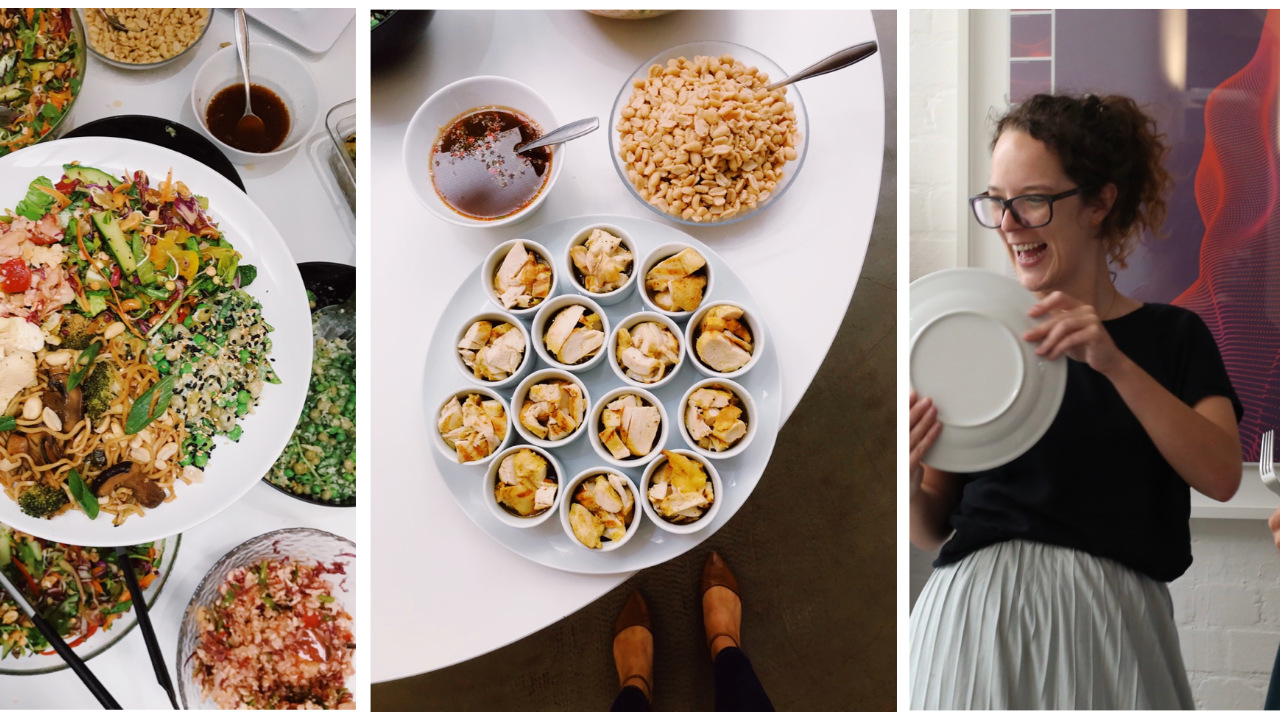
When I used to run The Bear Kitchen, we cooked daily meals for offices, including companies like
Airbnb. At the time, we didn’t have the language of behaviour change or choice architecture. We
were simply cooking food that made sense to us.
Meals were built around vegetables, grains, pulses, seeds and nuts, with lots of flavour coming from
herbs, spices, umami, caramelisation and contrast – in short, the principles of great cooking. The
food was colourful and deeply satisfying.
Meat and dairy were always optional add-ons, used deliberately for flavour rather than as the main
event. This meant that everyone could enjoy the same nutritionally balanced core meal, while still
respecting personal preference. Those who wanted meat could add it. Those who didn’t, didn’t have
to. No one felt singled out. No one felt deprived.
And something interesting happened.
People didn’t complain about the lack of meat at the centre of the plate. They didn’t feel like
anything had been taken away. In fact, many started eating less meat without really trying to. Not
because they were told to, but because the food was satisfying, varied, and genuinely delicious.
Over time, people reported feeling more energised. Lighter. More vibrant. And once that shift
happens, it tends to reinforce itself. The gut microbiome adapts. Cravings change. You start wanting
more of the foods that make you feel good.
That’s not ideology. That’s physiology.
As an example, one of the many meals we created followed this exact framework: a Thai-inspired
spread with green curry marrowfat peas and quinoa, a “papaya” salad made with cauliflower as a
local alternative, rainbow slaw with lime and herbs, and a small portion of fried noodles for comfort
and joy.
Plenty of flavour. Plenty of satisfaction. No dogma required.
I want to be very clear. I’m not against veganism or vegetarianism. I cook plant-based food for
myself all the time, and I have huge respect for people who choose a fully plant-based diet.
But when it comes to changing mainstream food habits, I don’t believe that rigid isms and dogmas
are the answer. They tend to polarise. To exclude. To turn food into identity rather than
nourishment.
A softer, more inclusive approach – one that nudges rather than mandates – stands a far better
chance of creating healthier, happier people over the long run.
Not perfect eaters.
Just people eating better, more often.
Happy home cooking,
Jens
